
Air pollution in Delhi-NCR brings stricter environmental rules for residential construction, commercial buildings and infrastructure projects. Construction activities can release dust through excavation, demolition, cement handling, material transportation and debris disposal. The Graded Response Action Plan (GRAP) sets out pollution-control measures that become stricter as air quality deteriorates.
For real estate developers, contractors and property buyers, understanding these restrictions is important because construction rules can affect site operations, project schedules and building activity during the winter pollution season.
On October 21, 2026, CAQM started GRAP Stage I across Delhi-NCR as Delhi's AQI reached 244, which means poor air quality. The Delhi government also announced new rules to limit construction work from November 1, 2026.
1. Is Construction Banned Under GRAP Stage I?
GRAP Stage I does not stop all construction work in Delhi-NCR. However, builders must control dust and follow the rules for checking pollution at construction sites.
Under the Stage I directions, construction and demolition materials and waste must be stored properly and covered. Vehicles transporting these materials must also be covered to prevent dust from escaping during transportation.
Construction sites must spray water and use anti-smog guns where needed to control dust. Builders must also collect and dispose of construction waste safely, as per the rules.
The CAQM has further directed agencies not to permit construction and demolition projects with plot areas of 500 square metres or more if they have not registered on the applicable government web portal or fail to meet the relevant dust-monitoring requirements.
2. Which Construction Activities Face Restrictions Under GRAP?
As air quality gets worse, GRAP rules become stricter. At higher stages, the authorities can stop certain construction and demolition work that creates a lot of dust.
The restrictions can affect activities such as excavation, demolition, road construction, masonry, cement handling and other dust-producing work, depending on the active GRAP schedule.
Developers and contractors must distinguish between activities that require dust-control measures and activities that fall under a specific suspension order. The exact restrictions depend on the GRAP stage in force and the conditions stated in the applicable directions.
A Stage III or Stage IV restriction should not be interpreted as a blanket prohibition on every type of work without checking the relevant order and its exemptions.
3. Delhi Announces Additional Winter Construction Restrictions
Delhi has also announced separate rules to control pollution during winter. These rules have set dates for construction restrictions and are different from the GRAP rules that apply across Delhi-NCR.
According to reports, the announced schedule includes:
- November 1, 2026, to January 31, 2027: Restrictions on dust-generating demolition and outdoor civil construction activities.
- December 10, 2026, to January 20, 2027: A complete construction and demolition ban in Delhi, as announced under the winter pollution-control plan.
These dates relate to Delhi's announced measures and should not automatically be applied to every city in NCR, including Noida, Greater Noida and Gurugram. The applicable orders and directions for each jurisdiction must be followed.
For real estate developers operating in Delhi, these dates are particularly important for planning excavation, external civil work, demolition, material procurement and contractor schedules.
4. How Construction Sites Must Control Dust
Construction companies must take practical steps to prevent dust from spreading beyond their sites.
Covering building materials: Sand, cement, soil and other dust-producing materials must be stored and transported according to applicable requirements.
Dust suppression: Contractors must use prescribed sprinkling systems, anti-smog guns and other suitable measures to reduce airborne particles.
Construction waste management: Debris must be collected, stored and transported through authorised arrangements. Dumping construction waste in open areas can lead to enforcement action.
Covered transportation: Trucks and other vehicles carrying construction materials or debris must follow applicable covering requirements.
Site monitoring: Eligible projects must comply with the relevant portal registration, monitoring and reporting rules. Authorities may inspect sites and take action against violations.
These requirements remain important even when a particular construction activity has not been suspended.
5. How GRAP and Winter Bans Affect Real Estate Projects
Construction bans can delay work on homes, offices and other buildings. If digging stops, foundation work may be delayed. Limits on outdoor construction can also slow down building work and outdoor development.
A suspension can also affect contractor deployment, the movement of building materials and the planned sequence of work. Developers may need to reschedule activities and coordinate with contractors to meet the applicable environmental requirements.
For property buyers, the active restrictions provide useful context when reviewing construction progress at an under-construction project. However, the impact on each development depends on its location, current construction stage, applicable exemptions and the duration of the restrictions.
6. What Should Developers and Contractors Do When GRAP Is in Force?
Builders should follow CAQM updates and local government orders as air quality changes. They must control dust, complete the required registrations and plan construction work around the latest rules.
Contractors must know which construction activities they can continue and which they must stop under the current rules. Good planning helps them follow the rules and manage their teams better.
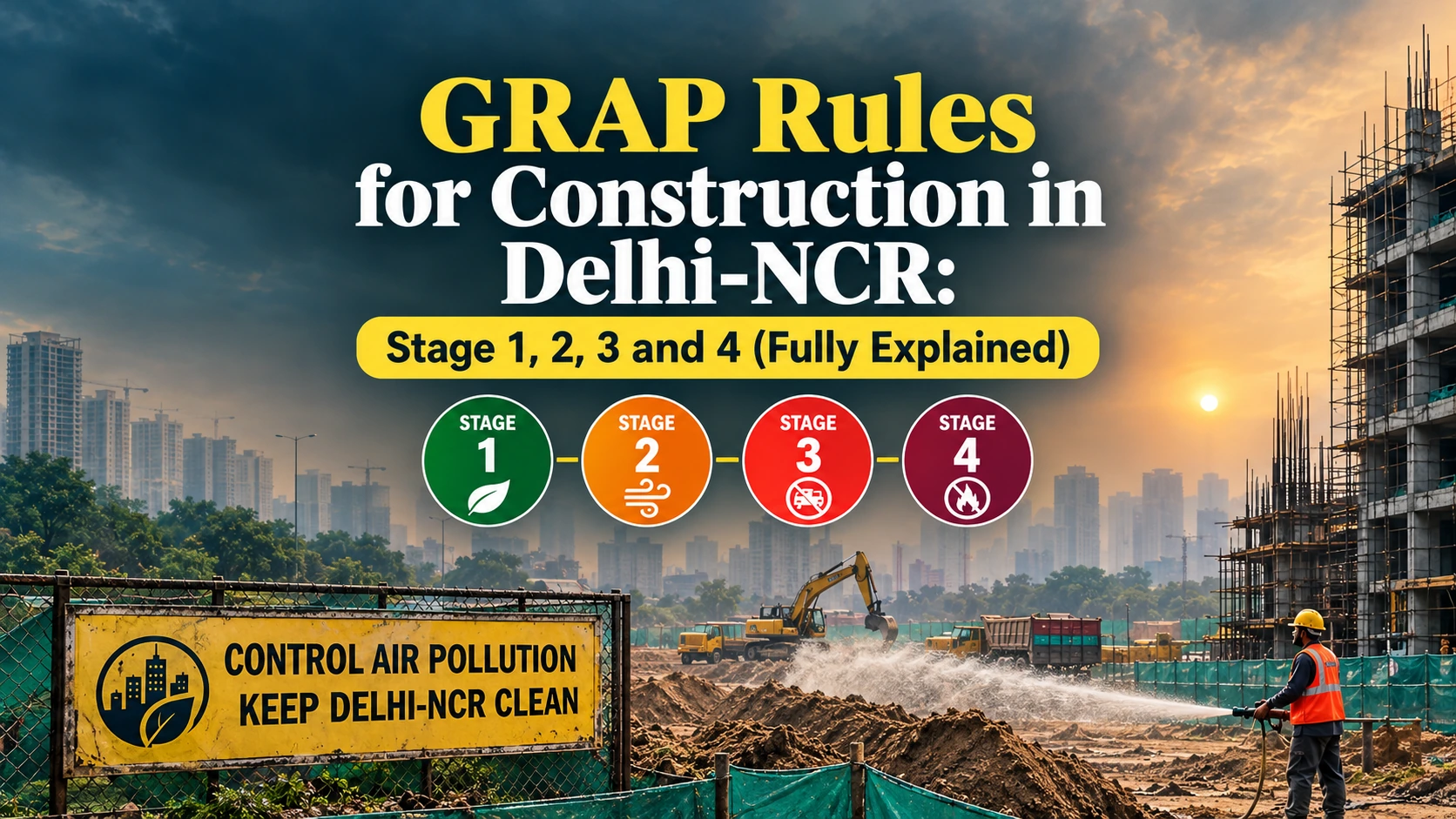
GRAP Stages and Their Impact on Construction (Fully Explained in Easy Way)
- Stage I — Poor AQI (201–300): Construction continues subject to dust-control requirements and enforcement of existing environmental rules.
- Stage II — Very Poor AQI (301–400): Stage I measures continue alongside additional pollution-control actions.
- Stage III — Severe AQI (401–450): Restrictions apply to specified dust-generating construction and demolition activities.
- Stage IV — Severe Plus AQI (above 450): Extensive construction and demolition suspensions apply, subject to specified exemptions.
Conclusion
GRAP helps control pollution from construction work across Delhi-NCR. As air quality gets worse, the rules become stricter. Builders may need to control dust, stop certain activities or pause construction work under the rules.
Property developers, contractors and construction companies must follow the active GRAP schedule, manage site dust and comply with applicable waste-handling and monitoring requirements. New Project Market helps property buyers understand Delhi-NCR's real estate market, project developments and the factors that influence construction progress.